If you close your eyes and imagine Vietnam, you might picture the chaotic motorbikes of Saigon or the limestone islands of Ha Long Bay. But far in the north, hidden above the clouds, lies a different world entirely.
Welcome to Sapa, the “Town of Clouds.”
For the Muslim traveler coming from the heat of the Middle East or Southeast Asia, Sapa is not just a destination; it is an escape. It offers the cool, crisp air of the Cameron Highlands, the dramatic mountain peaks of Switzerland, and a cultural vibrancy that is uniquely Vietnamese.
In 2026, Sapa has transformed from a sleepy backpacker outpost into a world-class destination with luxury cable cars, glass skywalks, and—most importantly—a growing ecosystem of Halal-friendly hospitality.
Whether you are here to conquer the highest peak in Indochina or simply sip hot tea while watching the mist roll over the rice terraces, this is your ultimate guide to the earthly paradise of Sapa.
1. Why Sapa is Perfect for Muslim Travelers
Before we dive into the “where” and “how,” let’s talk about the “why.”
The “Green” Escape In Islamic tradition, greenery and water are often associated with paradise (Jannah). Sapa is arguably the greenest place in Vietnam. The visual relief of seeing endless emerald rice paddies, deep forests, and flowing waterfalls is spiritually refreshing. It is a place of silence and reflection, far removed from the noise of the modern world.
The Climate Sapa is located at an altitude of 1,600 meters. While Hanoi might be sweating in 35°C heat, Sapa will be a cool 18°C. In the winter (December to February), it can even drop to 0°C, sometimes dusting the town in snow. For families from the Gulf who rarely experience cold weather, this is a magical novelty.
No “Nightlife” Pressure Unlike the party streets of Saigon, Sapa is wholesome. The nightlife here is about night markets, cultural dances, and sitting around a fire roasting sweet potatoes. It is inherently family-friendly and modest.
2. How to Get to Sapa (From Hanoi)
Sapa is located 320km northwest of Hanoi. In the past, this was a difficult journey. Today, thanks to the new highway, it is smooth and scenic. You have three main options:
Option A: The “Limousine” Van (Most Popular)
This is the most comfortable choice for families. These are luxury Ford Transits modified with massive, massage-chair style seats.
- Time: 5.5 to 6 hours.
- Cost: Approx. 400,000 – 500,000 VND ($16-$20 USD) per person.
- Why choose it: They pick you up directly from your hotel in Hanoi’s Old Quarter and drop you at your hotel in Sapa. No transfers needed.
- Muslim Tip: You can ask the driver to stop at a rest station that sells fruit instead of the one selling pork snacks.
Option B: The Sleeper Train (The Romantic Choice)
The train does not go to Sapa directly; it goes to Lao Cai City (at the bottom of the mountain). From there, you take a 45-minute bus ride up to Sapa town.
- Time: 8 hours (Overnight). Depart Hanoi at 10:00 PM, arrive Lao Cai at 6:00 AM.
- Cost: 600,000 – 1,200,000 VND ($25-$50 USD) depending on the cabin class.
- Why choose it: It is safer than the road (no winding turns), and sleeping on the train is a fun adventure for kids.
- Luxury Options: Look for the Chapa Express or Victoria Express carriages for a 5-star hotel experience on rails.
Option C: Private Car (The VIP Choice)
For complete privacy and control over your schedule.
- Cost: Approx. 3,500,000 VND ($140 USD) one way for a 7-seater car.
- Why choose it: You can stop whenever you want for prayers (Solat) or photos.
3. The Best Time to Visit
Sapa is beautiful year-round, but the “vibe” changes drastically depending on the month.
March – May (Spring): The Season of Flowers
- The Vibe: The weather is perfect (sunny days, cool nights). The valley is blooming with cherry blossoms, peach blossoms, and orchids.
- The Rice: The fields are filled with water, looking like giant mirrors reflecting the sky (“Pouring Water Season”).
September – October (Autumn): The Golden Season
- The Vibe: This is the peak season for photographers.
- The Rice: The rice terraces turn a brilliant, glowing yellow as they ripen for harvest. The entire valley looks like it is covered in gold.
- Note: Book hotels early! This is when Sapa is busiest.
December – February (Winter): The Misty Chill
- The Vibe: It is very cold, foggy, and moody.
- Why go: If you are lucky, you might see snow. It is the best time for sitting by a fireplace with hot cocoa. However, the thick fog can sometimes block the views.
4. Muong Hoa Valley: The Masterpiece of Nature
Now, let’s explore the crown jewel of Sapa: Muong Hoa Valley.
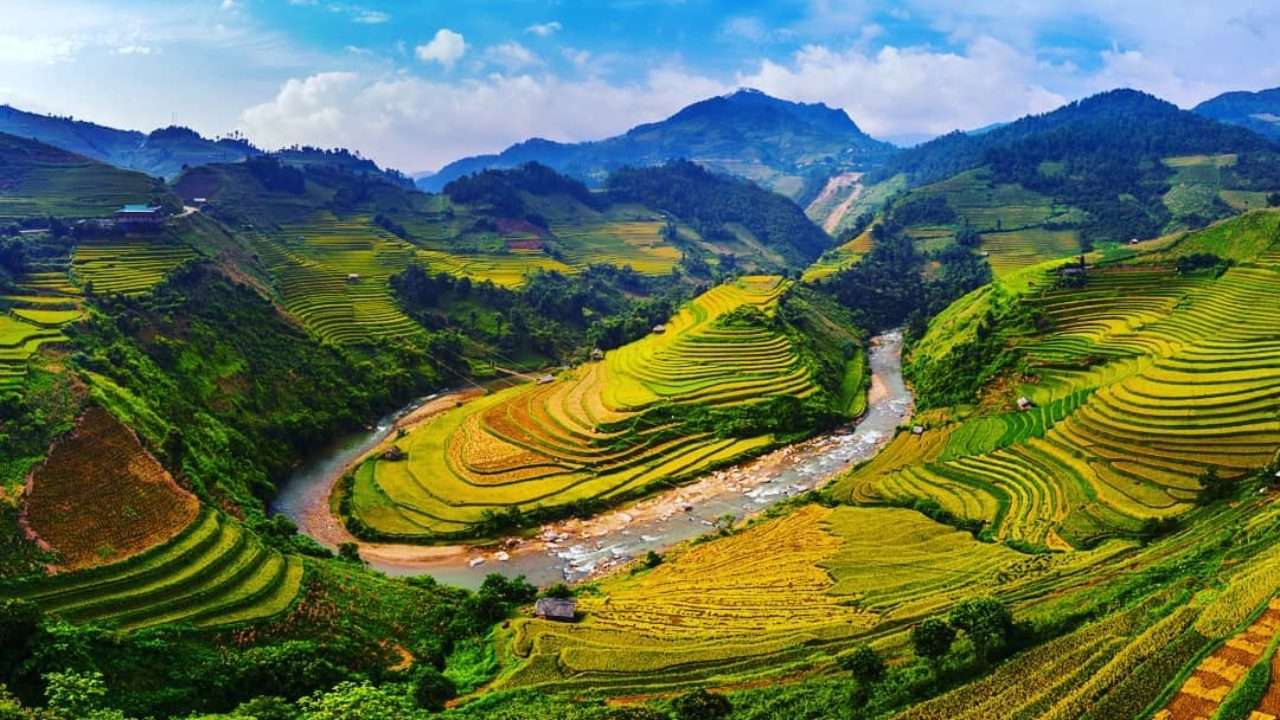
While many guidebooks give this a quick mention, it deserves a full day of your itinerary. This sprawling valley is carved by the Hoa Stream and flanked by two mountain ranges, creating a natural amphitheater of rice terraces that has existed for centuries.
The Terraces: A feat of Engineering
The Hmong and Dao people carved these steps into the steep mountains by hand. It wasn’t just for beauty; it was for survival, to grow rice where the land was too steep. Today, it is recognized as a National Scenic Site. When you look at them from above, they look like the fingerprints of God pressed into the earth.
The “Ancient Rock Field” Mystery
Scattered across the valley are nearly 200 massive boulders carved with strange, ancient symbols. Some look like maps, others like human figures or celestial charts.
- The Mystery: To this day, archaeologists do not know who carved them or exactly what they mean. They are distinct from the current ethnic minority cultures, suggesting a lost civilization once lived here.
- Visiting: You can walk right up to these rocks in the Ta Van area. Touching these cool, ancient stones connects you to a history thousands of years old.
How to Explore the Valley
1. The Relaxing Way (Muong Hoa Mountain Train) If you are traveling with elderly parents or young children, hiking might be too hard. Instead, take the Muong Hoa Funicular.
- The Train: It is a beautiful red train designed in a European vintage style.
- The Journey: It departs from the Sun Plaza in the center of town and glides along the edge of the mountain for 2km.
- The View: You get a bird’s-eye view of the entire valley without taking a single step. It is arguably the most scenic train ride in Southeast Asia.
2. The Adventurous Way (Trekking) For the fit traveler, nothing beats walking.
- Route: Start from Sapa town, trek down to Y Linh Ho, then Lao Chai (Black Hmong village), and end in Ta Van (Giay village).
- Distance: Approx. 6-10km.
- Muslim Tip: The hike is safe, but the path can be muddy. Wear good sneakers. You will pass many local houses; remember to be respectful and not take photos of people without asking.
5. Fansipan Legend: Touching the Clouds
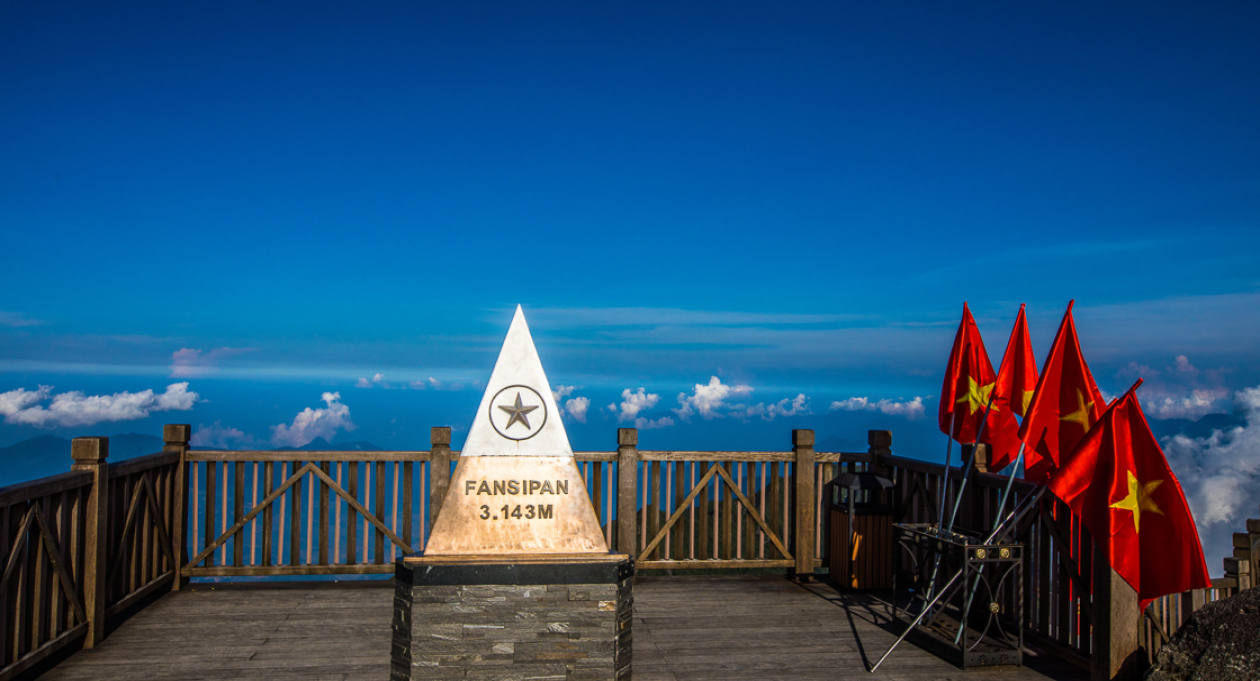
No trip to Sapa is complete without conquering Fansipan. At 3,143 meters, it is known as the “Roof of Indochina.”
In the past, this required a grueling 2-day hike through dangerous jungle. Now, thanks to the Sun World Fansipan Legend cable car system, you can reach the top in 20 minutes with zero effort.
The Journey Up
The experience is broken into three stages, each more breathtaking than the last:
- The Mountain Train: First, you take the red train (mentioned above) to the Cable Car station.
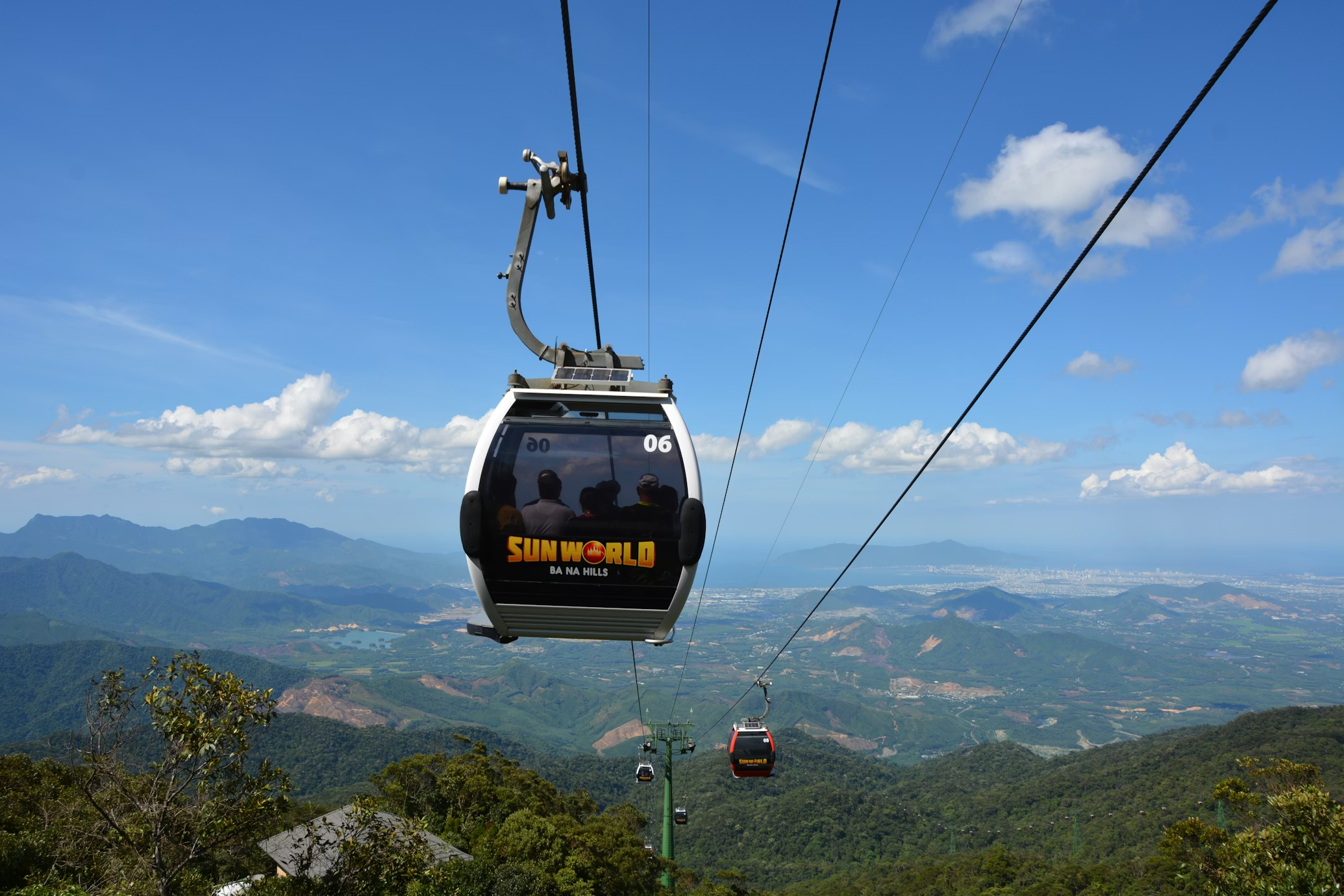
- The Cable Car: This holds the Guinness World Record for the longest non-stop three-rope cable car. As you lift off, the ground drops away. You fly over thick prehistoric jungles and waterfalls that no human can reach on foot. You literally fly through the clouds.
- The Funicular to the Peak: Once you reach the upper station, you can climb 600 stone steps to the very top, or take a second small funicular train.
At the Summit
When you step out at the peak, the air is thin and biting cold.
- The View: On a clear day, you can see all the way to China and Laos. It feels like standing on an island in the sky, surrounded by a white ocean of clouds.
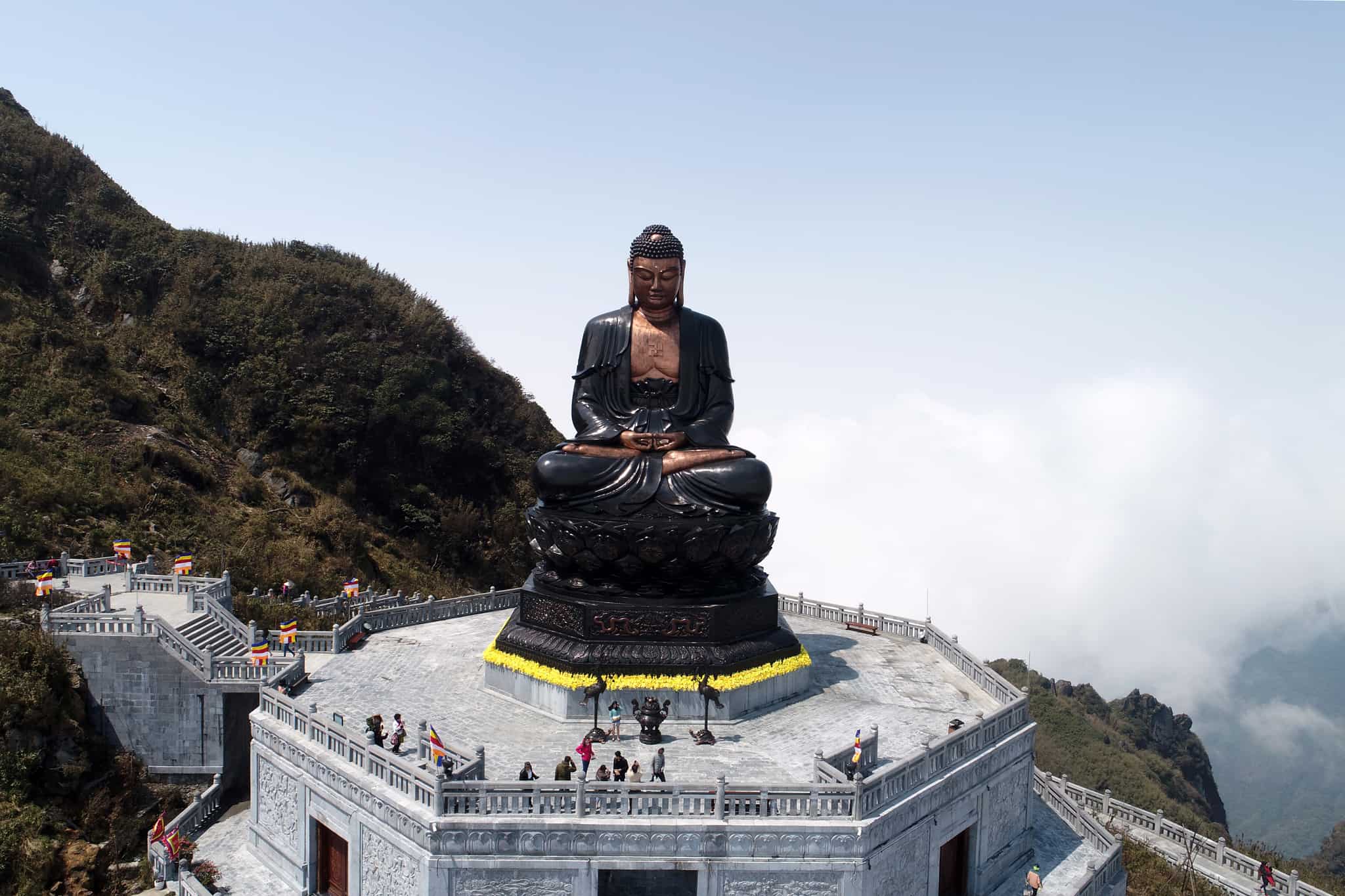
- Cultural Landmarks: The summit complex features massive bronze statues, grand pagodas, and the “Great Buddha” statue (the highest bronze Buddha in Vietnam). Even for non-Buddhists, the architecture is stunning against the backdrop of the sky.
- 2026 Price Update:
- Cable Car: ~850,000 VND ($34) Adult / 550,000 VND Child.
- Funicular (Train): ~150,000 VND ($6).
6. Cat Cat Village: A Living Museum
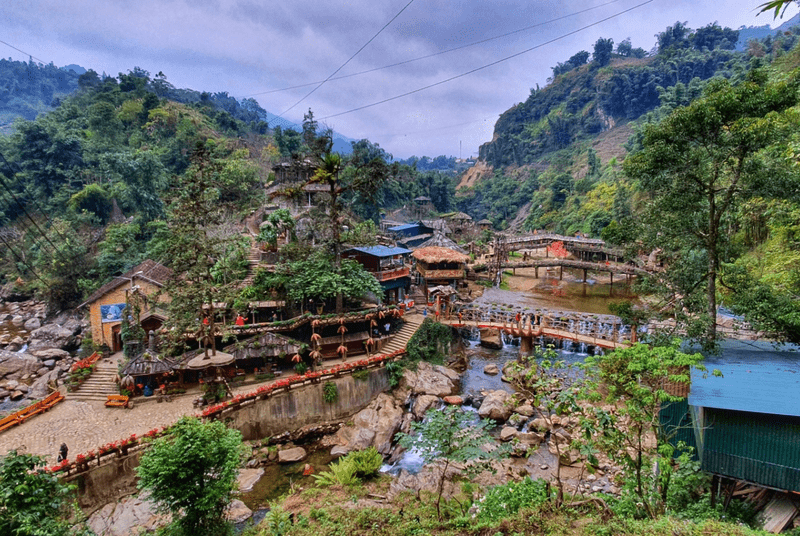
Located just 2km from Sapa town (a steep walk down), Cat Cat Village is the cultural heart of the Black Hmong people.
Why the “Black” Hmong?
You will notice the locals wearing dark, indigo-blue clothing. They grow the indigo plants right here in the valley and dye the hemp fabric by hand. The dye is so strong it often stains their hands blue.
The Village Walk
The path winds through the village, past traditional wooden houses with roofs made of “Pom Mu” wood.
- The Waterfall: At the bottom of the valley, a powerful waterfall crashes over giant boulders. Beside it stands a preserved French-era hydroelectric station.
- Cultural Performance: several times a day, there is a free dance and music performance in the communal house. It is a wholesome display of bamboo dancing and flute playing.
- Shopping: This is the best place to buy souvenirs. Look for beeswax batik fabric—a traditional Hmong art form where they draw patterns with beeswax before dyeing the cloth.
- 2026 Ticket Price: ~150,000 VND ($6).
7. The Waterfalls: Silver & Love
Sapa is a land of water. To see the raw power of nature, you must visit these two waterfalls located near the Tram Ton Pass.
Silver Waterfall (Thac Bac)
- The Sight: You can see this from the road. It is a massive white cascade falling 200 meters down the cliffside.
- The Activity: Climb the stone stairs to the high arch bridge that crosses directly in front of the falling water. The spray is refreshing (and loud!).
- Ticket: ~20,000 VND ($0.80).
Love Waterfall (Thac Tinh Yeu)
- The Vibe: Unlike the roadside Silver Waterfall, Love Waterfall requires a 20-minute gentle walk through a bamboo forest. It is much more peaceful.
- The Legend: Locals say this is where a fairy fell in love with a woodcutter’s flute music. The pool at the bottom is crystal clear and ice-cold. It is a perfect spot for quiet reflection (Tafakkur) on the beauty of creation.
- Ticket: ~70,000 VND ($3).
8. For the Brave: Rong May Glass Bridge

If you crave adrenaline, head to the Rong May (Dragon Cloud) Glass Bridge.
- The Location: It is located at the top of the O Quy Ho Pass, about 17km from town.
- The Elevator: First, you take a glass elevator that shoots up 300 meters inside the mountain.
- The Walk: You step out onto a transparent glass walkway that extends 60 meters out from the cliff face. You are standing 2,200 meters above sea level.
- The Feeling: Looking down between your feet to the jungle 1km below is terrifying, but the safety standards are world-class. It creates the illusion that you are floating in the air.
- 2026 Ticket Price: ~500,000 VND ($20).
9. Heaven’s Gate (O Quy Ho Pass)
Just past the waterfalls lies the O Quy Ho Pass, one of the longest and highest roads in Vietnam. The peak of this pass is called Heaven’s Gate (Cong Troi).
- Cloud Hunting: This is famous for a weather phenomenon where Sapa side is foggy, but once you cross the gate to the Lai Chau side, it is sunny.
- The Sunset: Arrive here at 5:00 PM. Grab a hot tea at one of the “Cloud Cafes” (cafes built on the edge of the cliff) and watch the sun dip below the horizon. The mountains turn purple, orange, and gold. It is arguably the best sunset view in Vietnam.
🍽️ Directory: The Ultimate Sapa Halal Food Guide (2026)
In the past, Muslim travelers had to survive on bread and eggs. Not anymore! Sapa now has several excellent options.
1. Cosiana Hotel Sapa (The Halal Pioneer)
- Location: 57 Fansipan Street.
- The Vibe: This hotel was one of the first to cater to Malaysian/Indonesian guests.
- What to Order: The Nasi Goreng here is legendary—spicy, savory, and topped with a perfect egg. Their Chicken Curry and Hot Pot are also 100% Halal certified.
2. Sapa Rasa Sayang Restaurant
- Location: Thac Bac Street.
- The Vibe: A newer establishment focusing on authentic Indonesian flavors.
- What to Order: Try the Beef Rendang (slow-cooked and tender) or the Gado-Gado (vegetable salad with peanut sauce) if you want something lighter.
3. Indian Gate / Bombay Halal
- The Vibe: When it is 5°C outside, nothing warms you up like Indian spices.
- What to Order: Chicken Tikka Masala, Lamb Rogan Josh, and garlic Naan fresh from the tandoor.
4. Vegetarian Options (The Safe Bet)
- If you are eating at a local Vietnamese restaurant with friends, look for “Rau Su Su Xao Toi” (Chayote tops stir-fried with garlic). It is the signature vegetable of Sapa—crunchy, sweet, and naturally Halal/Vegan. Just say “No Meat, No Lard” (Khong Thit, Khong Mo) to be safe.
🗓️ Suggested 3-Day Muslim-Friendly Itinerary
Here is how to combine all these amazing spots into a perfect trip.
Day 1: Arrival & The Valley
- Morning: Arrive in Sapa. Check into your hotel and rest.
- Lunch: Halal meal at Cosiana.
- Afternoon: Take the Muong Hoa Mountain Train to see the valley. Visit Cat Cat Village for a cultural walk.
Evening: Walk around Sapa Lake and the Stone Church. Dinner at Bombay Halal.
Day 2: The Roof of Indochina
- Morning: Take the cable car to Fansipan Legend. Spend the morning above the clouds.
- Lunch: Enjoy a vegetarian buffet at the summit or head back to town for lunch at Rasa Sayang.
- Afternoon: Drive to Silver Waterfall and Love Waterfall.
- Sunset: Watch the sun go down at Heaven’s Gate.
- Evening: Explore the Sapa Night Market for souvenirs.
Day 3: Adventure & Departure
- Morning: Visit the Glass Bridge for a thrill, or relax with a coffee in the clouds at a cliffside cafe.
- Lunch: Last Halal meal in town.
- Afternoon: Take the Limousine van back to Hanoi.
🧳 Packing List for Sapa
Because Sapa weather is unpredictable, pack smart:
- A Warm Jacket: Essential, even in summer nights. Puffer jackets are best.
- Comfortable Walking Shoes: You will be walking on slopes and stone steps.
- Raincoat/Umbrella: The mist can turn to rain quickly.
- Motion Sickness Pills: For the winding roads.
- Travel Prayer Mat: To pray in nature (cleanest place on earth!).
- Moisturizer/Lip Balm: The high-altitude air is dry and can chap your skin.
Conclusion
Sapa is more than just a destination; it is a feeling. It is the feeling of waking up to a window full of clouds. It is the taste of hot ginger tea on a cold afternoon. It is the sound of waterfalls and the smile of a Hmong grandmother.
For the Muslim traveler, it offers a rare combination of adventure, comfort, and spiritual peace. The mountains are calling—are you ready to answer?